
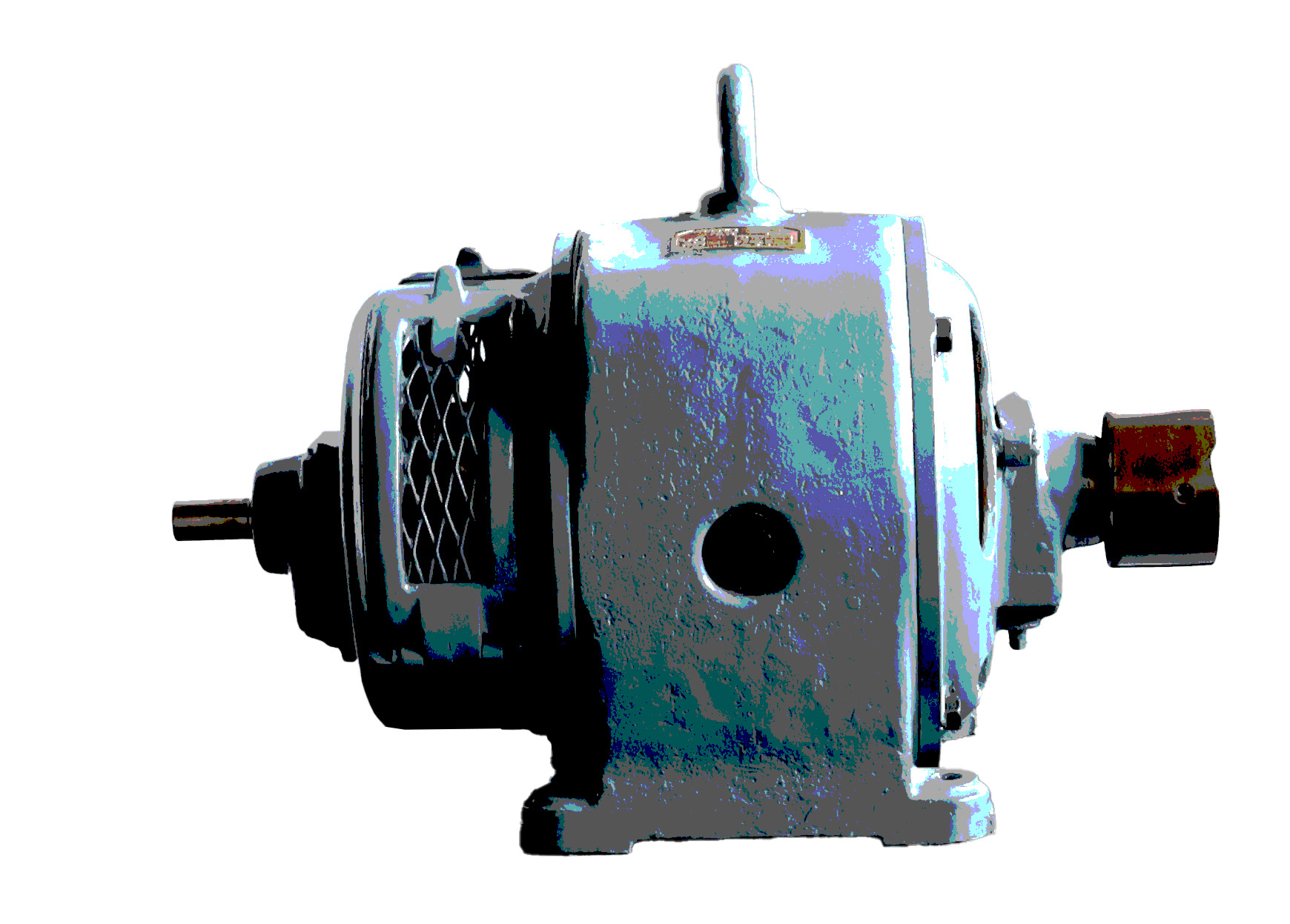
The electric motor is all around us: it drives trains, powers industrial machines, operates our many household appliances, makes lifts go up and down, compresses gas in pipelines and much more. Its history is the result of some major scientific breakthroughs and progressive technical innovations.
Electricity set in motion
In 1820, Danish physician Hans Christian Ørsted observed that an electrical current made the needle on a compass move. This fundamental discovery of a link between electrical currents and magnetic fields, a theory articulated by André-Marie Ampère, paved the way for an electromagnetic motor. In 1821, Englishman Michael Faraday invented the first device that could convert electrical energy into movement.
The electrical motors developed in the 1820s were confined to the laboratory. In 1837, Thomas Davenport patented a motor that could be used for industrial work (transport, turning wood, drilling metal). However, it failed to catch on commercially, as the high costs meant that it was no match for steam power.
The electric motor for the benefit of industry and day-to-day life
The Gramme dynamo (1869) was the first generator powerful and stable enough to be used on a large scale. Driven by a steam engine, it produced direct current. Powered by electricity, it became a motor, and so produced mechanical energy. Thanks to this invention, factories and workshops could be well-lit and power their machines. In the 1880s, Nikola Tesla developed the alternating current induction motor, which was better suited to the electricity distributed by power plants that were a long way away from where the electricity was to be used.
The 20th century saw the development of electric motors that were increasingly quiet and small, and which could be found in all sorts of different objects, including household appliances, toys and medical equipment.
A key element of the energy transition
These days, the electric motor is the preferred solution for sustainable mobility: it powers cars, bikes, buses and even some planes. Combined with energy from renewable sources, it allows us to reduce greenhouse gas emissions. An electric motor is very efficient: it transforms almost all the electricity into movement and wears out more slowly than a petrol engine. The main drawback remains the challenge of storing electricity.
